


Enter any house in India a few months before LKG admissions and you will find alphabet charts hanging on the wall, number-writing practice papers lying on the table and parents actively questioning their children on colours, shapes and letters.
This is common, because for many parents, school readiness is measured by a simple checklist: Does your child know their ABC’s? Do they count to fifty? Can they write their name?
Yes, these early academic skills have their place but are only a small part of a much bigger picture. School readiness is not about what a child knows when they start school. It’s about whether they have the skills and the confidence to adapt, participate, and learn in a new environment.
Building Emotional Confidence
The beginning of school can be a daunting period. Children are introduced to all sorts of experiences such as meeting teachers and other pupils as well as unfamiliar routines. It is also the period at which they leave their homes and start to spend long hours out in the world without their parents. Students that can actively identify and communicate their feelings tend to manage this transition better. This includes communicating with someone whenever they need help with something, or dealing with their frustrations when things do not work out as planned.
Learning to Work with Others
Interestingly enough, the classroom itself becomes one of the environments where the kids learn how to relate to a wider range of people. For example, they are required to share things, listen to others, wait until it’s their turn to talk, and follow the guidelines provided for classroom activities. It is within this environment that the children gain such qualities as empathy, patience, and understanding of other perspectives. Thus, this becomes crucial in making the children feel comfortable in the new environment.
Communicating with Confidence
Literacy is only one aspect of the entire communication process. The children must be able to communicate their needs and questions in an appropriate manner. When the children have enough confidence to approach their teacher for help or share any problems with their teacher, they would be more than willing to learn and take part in the process of learning. With the help of communication skills, the kids would become able to interact with other kids and make friends, and they would be able to handle themselves in classrooms as well.
Encouraging Independence
Skills that promote school readiness can be developed during everyday activities within their own home. Packing bags, tidying up items, observing certain routines, and making simple choices enable children to become independent and responsible.
Such mundane events give children the experience of managing themselves in an organized system. By taking control of age-related responsibilities, kids gain self-confidence and get ready to face any new challenge alone.
Keeping Curiosity Alive
One of the greatest gifts that children bring into their classrooms is their curiosity. Curiosity refers to the inherent urge that children have to investigate and discover new things. Studies carried out in modern times indicate that children are better at learning if left free to investigate new ideas on their own. Exploration leads to critical thinking and creates the passion for acquiring more knowledge. Simply put, it means that besides being taught new facts, children should also be allowed to ask “why” and “what if.”
The Importance of Physical Development
Physical fitness is another important aspect which usually gets overlooked. Acquiring fine motor skills helps children learn to draw, cut, write, etc., while gross motor skills helps them maintain their balance and coordination. Playful engagement is what helps children improve their physical skills, as well as aids in maintaining focus and good health. Running, jumping, climbing, and other physical activities are not something outside of the learning process, but what enable the child to build necessary physical skills for engaging in regular classroom activities.
Beyond the Checklist
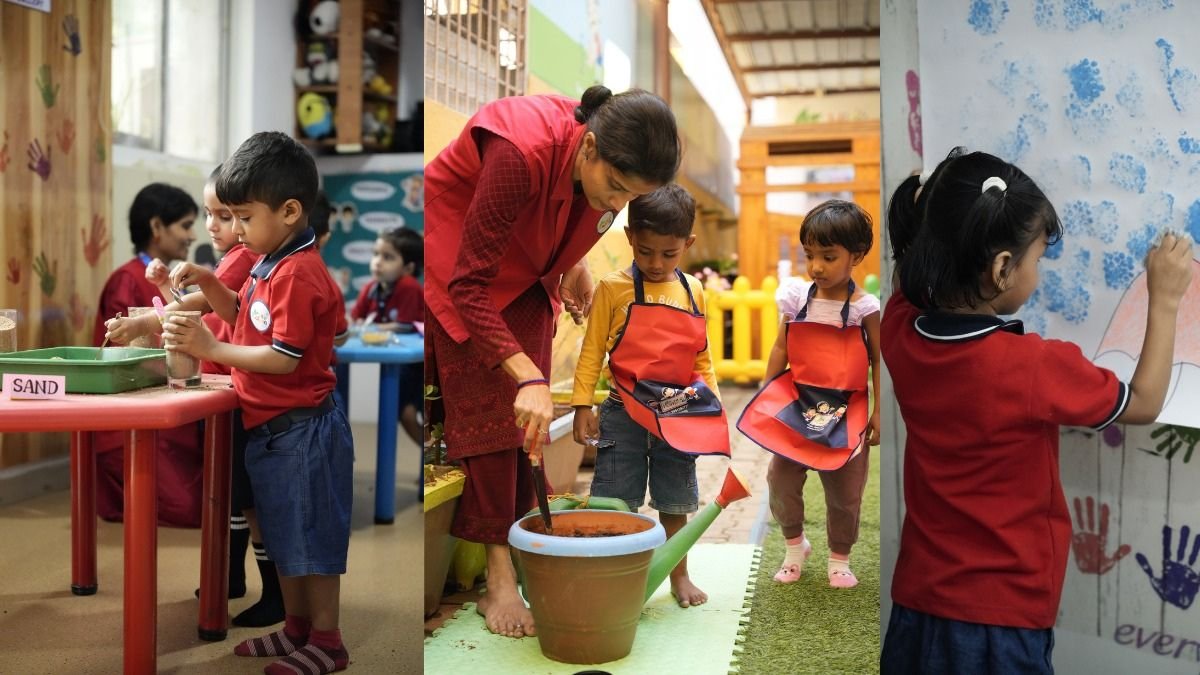
We must reconsider our idea of school readiness in light of the shifting expectations surrounding early childhood education. Children that are emotionally stable, socially aware, competent in communicating, autonomous in their behaviour, physically equipped, and eager to study will be considerably better prepared for the educational setting than those who understand few academic concepts.
It is not necessary to meet particular requirements by a specific age in order to be prepared for school. Rather, it entails the development of a variety of traits and abilities that would facilitate the child’s adaptation, learning, and advancement.
<p>The post Rethinking School Readiness Beyond Alphabets and Numbers first appeared on Hello Entrepreneurs.</p>

Comments are closed.