


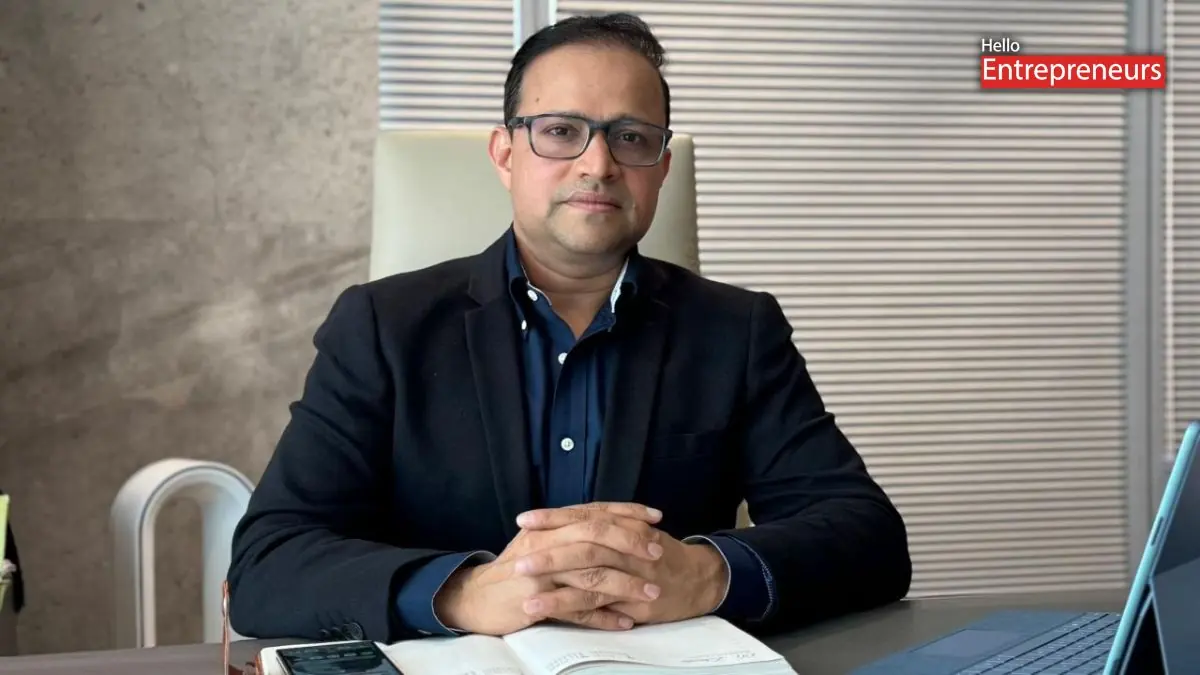
1. What innovations or mindset shifts have you observed across developers and contractors?
MP- Over the years, there has been a noticeable shift from treating scaffolding and formwork as purely temporary utilities to viewing them as critical engineering systems. Developers and contractors are now more open to design-led solutions, modular systems, and structured planning. There is greater emphasis on speed, safety, and precision, especially in metro, highway, and industrial projects with tight timelines and complex geometries.
2. Was there a turning point that made you realize the need for smarter access systems in Indian construction?
MP- The turning point came from working on increasingly complex infrastructure projects where conventional systems created delays and safety challenges. As structures grew taller and layouts more demanding, it became clear that engineered, modular access systems were necessary. These experiences reinforced the need for precision-designed scaffolding and formwork that could be planned in advance rather than adjusted on site.
3. Are current safety regulations sufficient, or is it time for a new compliance framework?
MP- Current safety regulations provide a necessary baseline, but implementation and consistency remain critical challenges. As projects become larger and more complex, safety practices must go beyond compliance and become part of engineering planning itself. Better design integration, standardised systems, and disciplined execution can significantly improve site safety without waiting for new regulations alone.
4. Is it labor, engineering, technology, or procurement bottlenecks?
MP- In reality, it is a combination of all four. Skilled labor availability, engineering coordination, procurement timing, and technology adoption all influence project outcomes. From a scaffolding and formwork perspective, early-stage engineering alignment helps reduce downstream bottlenecks. When systems are well planned and standardised, execution becomes smoother even under challenging site conditions.
5. Will we see automation, AI-driven design, or prefab dominance across sites? Where is Translite positioning itself in that future?
MP- The industry will gradually see more automation and digital planning, particularly in design coordination and fabrication consistency. At Translite, the current focus remains on strengthening engineering design, modularity, and manufacturing quality. While advanced technologies may influence the sector over time, the immediate priority is delivering reliable, well-engineered systems that work effectively on real project sites.
6. Can you share case studies where Translite’s systems impacted execution or safety?
MP- Across metro corridors, expressways, and industrial projects, Translite’s role has focused on providing stable, precision-engineered scaffolding and formwork systems. By using modular Cuplock, Ringlock, and project-specific shuttering solutions, teams have been able to achieve predictable assembly, stable access, and smoother execution. These improvements contribute to safer working conditions and better control during critical construction stages.
7. Are there proprietary technologies, design innovations, or process advantages that set you apart?
MP- Rather than proprietary technologies, Translite’s strength lies in disciplined engineering processes, in-house design capability, and manufacturing consistency. Load calculations, system planning, and quality-controlled fabrication allow predictable performance across projects. This process-driven approach ensures reliability and repeatability, which are essential for large-scale infrastructure projects where margins for error are limited.
8. Are Indian clients ready for this upgrade in mindset and cost structure?
MP- There is increasing awareness among Indian clients about the long-term value of engineered scaffolding and formwork. While cost sensitivity remains, many now recognise that better-designed systems reduce delays, rework, and safety risks. This shift is especially visible in metro, highway, and industrial projects, where precision and execution speed directly affect overall project performance.
9. As an India-based manufacturer supplying internationally, how do you compete in export markets?
MP- International markets demand consistent quality, compliance, and delivery discipline. Translite addresses this by adhering to recognised material and quality standards, maintaining uniform fabrication practices, and aligning systems to project requirements. Competing globally requires reliability rather than positioning alone, and this focus has helped build credibility in markets such as the Middle East.
10. What’s next for Translite in terms of product evolution or diversification?
MP- Product evolution at Translite is guided by on-ground project requirements. Strengthening modular scaffolding systems, expanding formwork solutions, and supporting diverse sectors such as housing, infrastructure, and industrial projects remain priorities. Any diversification is approached cautiously, ensuring that engineering depth and execution quality remain consistent across all offerings.
11. Are you exploring AI-integrated designs or full-cycle EPC partnerships?
MP- At present, the emphasis is on improving engineering planning, design coordination, and fabrication processes rather than adopting untested technologies. Collaboration with EPC partners focuses on early design involvement and system planning. As the industry evolves, future tools may play a role, but only where they add clear, practical value to project execution
<p>The post Questions to Mayank Pathak- Managing Director, Translite Scaffolding Limited first appeared on Hello Entrepreneurs.</p>

Comments are closed.