


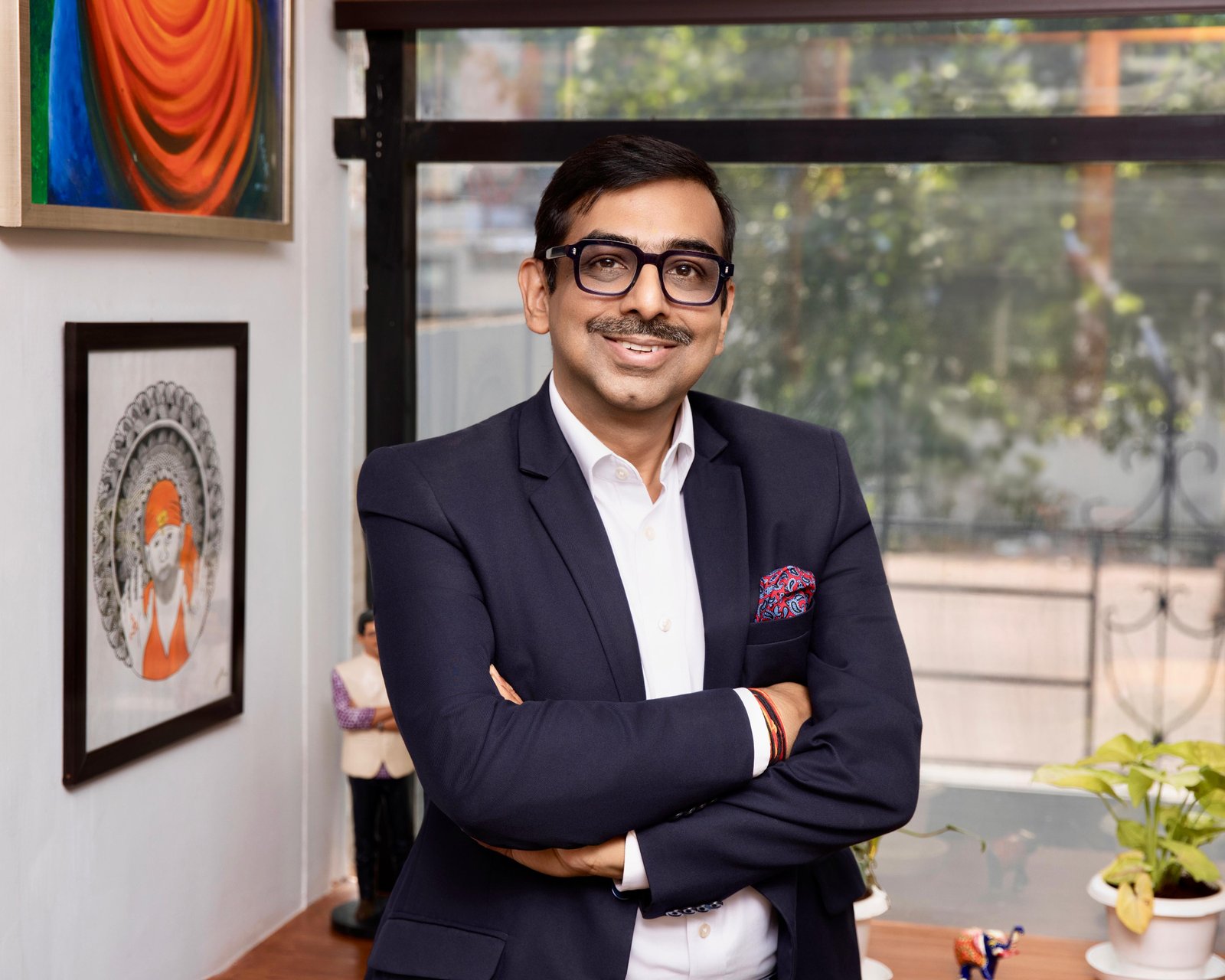
A few weeks ago, I stood in front of our team to celebrate another milestone in the growth of AskSila’s expert community. It brings together people such as a radio industry veteran with a quarter-century of stories, a social entrepreneur who turns cotton bags into livelihoods for rural women, and a cybercrime investigator who has spent two decades guarding the country’s digital borders. Different careers, different kinds of hard-won knowledge — each now living as an AI-powered digital twin that anyone can simply talk to.
Watching that room, I found myself thinking about a much older, simpler question. When the internet first arrived, search engines changed everything about how we found information. A few keywords in a search bar, and the world’s knowledge sat at our fingertips. It was revolutionary, and for two decades, search stayed the default answer to almost every question.
But in 2026, I think we’re asking a different question.
In a world already overflowing with information, is finding more content really the problem? Or is it finding someone we can actually trust?
India Has Always Moved Fast on Digital
India’s digital transformation over the last decade has been remarkable, and I’ve had a front-row seat to much of it, working with diplomatic missions, trade bodies, and industry groups as the country built one digital layer after another.
From Aadhaar and UPI (Unified Payments Interface) to ONDC (Open Network for Digital Commerce) and the wider Digital Public Infrastructure (DPI) stack, India has shown the world what technology deployed at population scale actually looks like. Affordable smartphones and cheap data connected hundreds of millions of citizens; digital payments rewired daily commerce. Today, ordering groceries, consulting a doctor, applying for a loan, or sitting in on a university lecture can all happen from the same device in someone’s pocket.
That habit has created a generation that expects technology to be fast, personal, and immediate, and the next expectation is already forming. People are done spending hours across a dozen tabs. They want a straight answer, quickly, from a source they trust.
Information Is No Longer Scarce. Trust Is.
The internet was built to solve a scarcity problem. Today it faces the opposite one.
Search “best investment options” and you’ll get thousands of articles, YouTube videos, influencer takes, and forum threads, most looking equally credible, few actually earning that credibility. Ask about your health, your career, or your legal rights, and you’ll run into the same wall of confident, contradictory noise.
More information hasn’t made decisions easier. It’s made trust the internet’s scarcest resource.
That’s especially true in India, where millions of first-time internet users are making genuinely important calls, a student in Jaipur prepping for UPSC (Union Public Service Commission exams), an entrepreneur in Coimbatore raising her first round, a farmer in Punjab trying to make sense of a new government scheme. None of them need more information. They need someone credible to guide them through it.
AI Has Changed the Way We Ask Questions
Generative AI has already rewired user behaviour. People type full questions instead of fragments. They expect a conversation, not ten blue links. They’d rather have something explained to them than go find and stitch it together themselves, arguably the biggest shift in how we use the internet since search itself.
But there’s a distinction I think gets lost in most conversations about this shift: processing information and having expertise are not the same skill.
I’ve spent close to three decades in rooms where deals get closed, brands get built from nothing, and businesses get pulled back from the edge. The one thing I can tell you for certain is that none of that judgment came from reading about it, it came from getting it wrong a few times first, in rooms not run by me. That’s not something you download. It’s something you sit through.
India’s Greatest AI Opportunity Isn’t Data — It’s Expertise
India sits on one of the largest knowledge economies on the planet. Its doctors treat millions of patients a year. Its teachers educate one of the largest student populations anywhere. Its engineers build products used on every continent. Its lawyers, chartered accountants, researchers, and entrepreneurs carry decades of accumulated judgment that no dataset can replicate.
The problem was never a shortage of expertise. It was access to it.
A good cardiologist can only see so many patients in a day. A respected professor can only teach so many students in a term. A founder who has actually built something can’t mentor every person who wants to build the same thing. Time was always the ceiling.
This is also how I think about India’s Global Capability Centre (GCC) story. The world didn’t come here just for cost, it came for judgment at scale. The next chapter of that story isn’t about how many people we can put on a task. It’s about how much of that accumulated judgment we can put within reach, for anyone who needs it, at any hour.
Artificial intelligence is what finally moves that ceiling. By building intelligent digital representations of real experts, capable of answering questions, sharing what they’ve learned, holding an actual conversation, we can put human expertise in more hands than time alone would ever allow. This isn’t about replacing the professional. It’s about multiplying what one person’s career can reach. “Still human. Just scaled.”
The Rise of Digital Experts
I don’t have to imagine what this looks like. I’ve watched it happen, one onboarding at a time.
When Nisha Narayanan, Director and COO of Red FM, brought her Sila online, twenty-five years of media and brand-building experience, the kind you don’t get from a course, became something anyone could ask about audience growth or brand storytelling, at 11 p.m. on a Tuesday if that’s when the question came up.
When Srikanth Bolla did the same — the visually impaired entrepreneur who became the first international blind student admitted to MIT and went on to build Bollant Industries, his thinking on resilience and building an inclusive workforce stopped being confined to a stage and started reaching anyone willing to ask.
When Aryah Vaibhhav Mahajan, founder of IVillage A Family, launched her twin, a rural women’s livelihood model she spent years building by hand, training women to turn cotton into an income, became something a first-time social entrepreneur in a small town could learn from directly, without waiting for an event invite.
When Dr Shuchin Bajaj, an expert in Healthcare, brought his Sila online, twenty-eight hospitals’ worth of experience building affordable, high-quality care in India’s small towns became something a first-time healthcare entrepreneur anywhere could ask about, instead of waiting for him between hospital rounds.
When Chef Narendra Singh Latwal brought his Sila online, decades spent running professional kitchens and judging events like World Food India and Culinary Art India stopped being confined to a competition stage — any young chef could now ask him for the real technique behind a dish, not just a recipe copied off a video.
When MeeMaa — Meena Mahajan, the spiritual teacher and mindfulness coach known to thousands simply as Guru Maa, brought her twin online, two decades of guiding leaders through stillness and clarity became something anyone carrying stress at midnight could turn to, without waiting for the next satsang.
When Rica Roy, NDTV’s Sports Editor and the voice behind ‘The Business Called Cricket’ on Red FM, brought her Sila online, two decades of covering Indian cricket from the inside became something a young sports journalist could question directly, instead of just replaying her old interviews.
When Dhananjay Kumar, the coach behind Perfection IAS, brought his Sila online, years of walking UPSC and BPSC aspirants through prelims, mains, and mock test series became something a working aspirant in a small town could ask about at 11 p.m., long after his own evening batch had wrapped up.
And when Amit Dubey, one of India’s most recognised cybercrime investigators, did it, a question about staying safe online no longer had to wait for his next television or radio appearance.
None of them stopped being who they are. They just became reachable in a way a calendar was never built to allow.
Why This Matters for India
India has the world’s largest youth population, a fast-growing creator economy, and one of the fastest-growing AI developer communities anywhere. Millions of Indians already learn from YouTube creators, LinkedIn voices, founders, doctors, and financial educators every day.
The natural next step is interactive expertise. Instead of watching a recorded video, ask it a follow-up question. Instead of scrolling a comment section hoping someone answers, have an actual exchange.
For a student in a Tier-2 or Tier-3 town, that could mean a real conversation with a mentor who was previously just a name on a poster — the way a young filmmaker could now put a question directly to someone like Sandeep Marwah, founder of the Asian Academy of Film & Television (AAFT), instead of waiting for a workshop seat. For a small business owner, it could mean instant, specific guidance from someone who has actually built a company. For a working professional, it could mean continuing their education directly from the people shaping their field right now.
In a country where demand for good guidance consistently outstrips supply, that’s not a small thing.
The Future Internet Will Be Built on Credibility
The internet rewarded whoever ranked. Social media rewarded whoever posted the most. I think the AI era will reward whoever actually knows something, and can prove it.
As synthetic content gets easier to produce, credibility gets harder to fake. People will care less about where an answer came from and more about who’s actually standing behind it. Verified expertise and a real track record will be the only currency that holds its value.
That’s not just a technology shift. It’s a values one.
Looking Ahead
Search engines organised the internet’s information. AI made that information conversational. The next chapter goes one step further, it makes expertise itself something you can simply reach.
For India, that’s more than a technology trend. It’s a chance to close real gaps in access, back millions of learners and first-time founders, and put the country’s collective, hard-earned knowledge within reach of anyone who needs it, at a scale only AI can offer.
The search bar isn’t going anywhere just yet. But somewhere in the next few years, I don’t think it’ll be the first place people go when they need an answer.
They’ll go looking for someone who’s actually been there.
<p>The post Beyond Search: Why India’s Next Digital Revolution Will Be Powered by AI Experts, Not Search Engines first appeared on Hello Entrepreneurs.</p>

Comments are closed.